1-888-601-9980

- Pre-existing conditions include any illness, injury, diagnosis, treatment, or medication before your policy starts
- Insurers assess risk to determine approval, premiums, ratings, and exclusions
- You can still get coverage with pre-existing conditions by choosing rated policies, simplified issue, or guaranteed issue plans
- Claims can be denied for non‑disclosure, incomplete records, or policy lapses
A pre-existing condition is any illness, injury, or medical issue you had before your insurance policy took effect. Understanding pre-existing condition insurance in Canada is important because insurers review your medical history to assess risk, determine premiums, and decide whether to approve coverage, apply ratings, or impose exclusions.
In this guide, you’ll learn what counts as a pre-existing condition in Canada, how it affects approval, pricing, and claims, and what to do if an application or claim is denied.
What counts as a pre-existing condition in Canada?
In Canada, a pre-existing condition means any medical problem, diagnosis, or injury you had before your policy came into effect. Insurers review your medical history, including diagnoses, symptoms, treatments, tests, and medications.
Insurers consider a condition pre-existing if you:
- Experienced symptoms or sought medical advice
- Received treatment or specialist referrals
- Took prescription medication (including as‑needed)
- Received a diagnosis before coverage began
Now that you know how insurers determine whether a condition is pre-existing, here are the types of medical issues insurers most often review during underwriting.

Call 1-888-601-9980 to speak to our licensed advisors right away, or book some time with them below.
What are some common pre-existing conditions?
Common pre-existing conditions include chronic illnesses, metabolic disorders, mental health conditions, and any medical issue you were diagnosed with or treated for before your policy started. Even fully healed conditions (like a previous fracture or concussion) may still be reviewed, depending on your policy terms. Let’s take a look at some common pre-existing conditions.
1. Chronic and serious illnesses
- Cancer
- HIV/AIDS
- Coronary artery disease
- Congestive heart failure
- Stroke
- Alzheimer’s disease
- Parkinson’s disease
- Kidney disease
- Liver disease or cirrhosis
2. Metabolic and lifestyle-related conditions
- Diabetes
- High blood pressure
- Obesity (including Class III obesity)
3. Mental health conditions
- Anxiety
- Depression
- Bipolar disorder
- Mood disorders
- Eating disorders (anorexia, bulimia)
4. Other medical conditions
- Post-transplant conditions
- Chronic pain disorders
- Long-term or recurring injuries
These conditions play a direct role in how insurers assess your risk. Here’s how pre-existing conditions affect your life insurance application in Canada.
How do pre-existing conditions affect life insurance in Canada?
Insurers assess how your condition affects risk, then decide your eligibility, pricing, and any exclusions. While each insurer has its own underwriting guidelines, your application is reviewed individually based on your age, coverage amount, medical history, lifestyle, and the stability of your condition.
As part of underwriting, insurers collect information about your current health, lifestyle, and family history. They may do this through a health questionnaire or tele-interview and can request a paramedical exam (vitals and lab work), an attending physician statement (APS), or medical records with your consent. These details help insurers assess hereditary risks and verify your medical history. The method varies by insurer, age, coverage amount, and distribution channel.
Based on this assessment, insurers assign your risk category:
- Preferred risk: Lower premiums for very healthy applicants
- Standard risk: Typical premiums for average risk
- Rated/Substandard risk: Higher premiums due to elevated risk; sometimes temporary if stability improves
This risk classification affects your coverage eligibility, premium rates, and potential exclusions.
How pre-existing conditions affect other types of insurance?
Pre-existing conditions increase the likelihood of exclusions, higher premiums, or modified coverage for living benefit insurance, such as critical illness and disability insurance.
These products pay a lump sum or monthly benefit while you are still alive, triggered by a covered illness, injury, or disability. Since insurers view the risk of developing a serious illness or disability as higher than the risk of premature death, they apply stricter underwriting to your medical history. This closer review often results in more exclusions, limited benefits, or declines for applicants with pre-existing conditions.
Can you get insurance with a pre-existing condition?
You can qualify for insurance with pre-existing conditions. After underwriting is complete, your application typically results in one of these categories:
- Declined: Coverage is refused if the insurer finds the risk too high at this time
- Rated: Approved with higher premiums. Ratings may be temporary or permanent. Temporary flat extras often apply to recent medical events, high-risk activities, or specific risks and usually last 1-2 years (varies by insurer). Permanent ratings remain unless new medical evidence supports reconsideration
- Exclusion: Benefits related to the excluded condition will not be paid. Exclusions are rare for life insurance, but common in critical illness, disability insurance, and some travel insurance
- Standard/preferred: Approved at typical or lower premiums when the condition is stable, well-controlled, or not considered risky
- Postponed: The insurer delays a decision pending further stability or medical evidence. Reapply intervals vary by condition, commonly 6–12 months, but can range from 3 to 24+ months depending on surgeries, diagnostic tests, or medication changes.
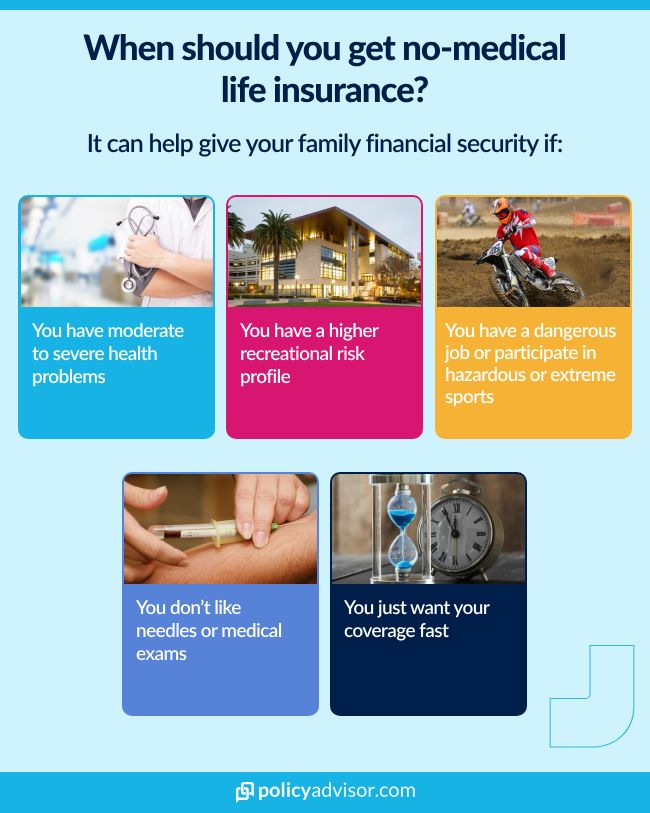
You still have options, even if approval isn’t straightforward. You may qualify for coverage with a rating or, in some cases, an exclusion (more common for critical illness or disability insurance). You can also consider non-medical policies that don’t require detailed health information.
Tips to get coverage if you have a pre-existing condition
You can still get coverage with a pre-existing condition. Here’s what improves your approval chances and pricing during underwriting in Canada.
- Be honest on your application: Disclose all symptoms, tests, diagnoses, and treatments. Non-disclosure can lead to denied claims or policy cancellation, especially during the two-year contestability period
- Work with an experienced advisor: PolicyAdvisor’s licensed advisors review each insurer’s underwriting rules for your condition and find the policy that offers the best fit and price for you, at no extra cost
- Consider non-medical or simplified issue policies: These options ask fewer medical questions and require no exam, which can make approval easier if you have certain conditions. Just note that they come with smaller coverage amounts and higher premiums than fully underwritten plans
- Maintain documentation of your health: Keep recent test results, physician notes, and treatment records handy. Insurers may request them to assess your risk
- Improve controllable risk factors: Manage conditions like high blood pressure, diabetes, or obesity. Stable results can reduce ratings over time
- Review multiple insurers: Underwriting rules differ across insurers. Comparing options can turn a decline into an approval, or reduce a rating to standard pricing
- Consider policy with a waiting period: Some insurance products have waiting or look-back periods. Guaranteed issue life often has a 2-year non-accidental death waiting period. Disability insurance includes elimination periods of 30-180 days before benefits start. Critical illness policies may have a 30-day survival period or condition-specific waiting periods. Travel insurance commonly applies pre-existing stability look-backs of 90-365 days. Periods vary by product, insurer, and condition
Beyond the application process, pre-existing conditions can also affect claims. Here are the most common reasons insurers deny claims related to pre-existing conditions.
What to do if you are denied life insurance coverage for health reasons
If you’re declined or heavily rated due to health issues, you still have options. Non-medical policies can provide coverage without full underwriting.
- Non-medical (simplified issue) life insurance: You answer a few health questions instead of completing a medical exam or interview. Approval is faster, but premiums are higher and coverage amounts are limited
- Guaranteed issue life insurance: No medical questions or underwriting required. Approval is guaranteed regardless of health. Premiums are the highest, and coverage is usually capped at around $50,000
Which is the best life insurance company for pre-existing conditions?
No single insurer is “best” for every condition. Licensed experts from PolicyAdvisor help you compare offers from Canada’s top companies. Our experience shows that some insurers like iA and Beneva offer greater risk tolerance and more accommodating underwriting.
We work directly with underwriters to find your best rates. We also work with non-medical carriers such as Industrial Alliance, Canada Protection Plan, Humania, and Assumption Life for faster coverage options.
Frequently asked questions
Do pre-existing conditions affect life insurance approval?
Yes, pre-existing conditions affect your life insurance approval because insurers use them to assess your risk. They review your medical history, stability of the condition, and current treatment to decide whether to approve you, rate you, or offer exclusions.
Can you get life insurance if you have a pre-existing condition?
Yes, you can get life insurance with a pre-existing condition, but your options depend on the severity and stability of your health issue. Insurers may offer traditional coverage, rated premiums, simplified issue, or guaranteed issue policies.
What medical issues count as pre-existing conditions?
Medical issues count as pre-existing conditions when they existed before your policy’s start date. This includes diagnoses, symptoms, treatments, medications, or medical advice related to any condition.
Will life insurance cost more if I have a pre-existing condition?
Often, life insurance premiums are higher if your pre-existing condition increases risk. If your condition is well-controlled and documented, you may still qualify for standard or even preferred pricing, depending on the insurer and product.
What if a life insurance company denies my application?
If a life insurance company denies your application, you can still qualify with another insurer. Each company evaluates risk differently, so working with an advisor helps you find one that accepts your health history.
Can I get life insurance if I have diabetes?
Yes, you can get life insurance with diabetes if your condition is well-managed. Insurers will review your A1C levels, medication, treatment history, and any diabetes-related complications before deciding on approval and pricing.
Does high blood pressure count as a pre-existing condition?
Yes, high blood pressure counts as a pre-existing condition because it exists before your policy begins. Insurers check your readings, medication stability, and related risks like heart disease to determine your premium.
Can I get life insurance if I have anxiety or depression?
Yes, you can get life insurance if you have anxiety or depression. Insurers look at diagnosis, medication adherence, therapy, time since last episode, and any hospitalizations or time off work.
What is a look-back period in Canadian insurance?
A look-back period is the timeframe in which insurers review your medical history to assess risk for a policy. It varies by product and condition: life insurance may ask about hospitalizations or tests from the past 2–10 years, serious conditions like cancer or HIV may be considered “ever,” and travel insurance typically looks back 90–365 days. Disability and group accident & sickness plans may have specific pre-existing condition limitations. Look-back periods differ by insurer, product, and condition, so there is no single standard.
What documents should I prepare before applying for life insurance in Canada?
Prepare a list of your medications, recent lab results, physician notes, imaging reports, and a summary of past treatments or surgeries. Having these ready can speed up underwriting and help ensure accurate coverage decisions.
What is the contestability period in Canada?
Most life insurance policies in Canada have a two-year contestability period. During this time, insurers can review your application and may rescind the policy if they find a material misrepresentation. After two years, the policy is generally incontestable, except in cases of fraud.
The information above is intended for informational purposes only and is based on PolicyAdvisor’s own views, which are subject to change without notice. This content is not intended and should not be construed to constitute financial or legal advice. PolicyAdvisor accepts no responsibility for the outcome of people choosing to act on the information contained on this website. PolicyAdvisor makes every effort to include updated, accurate information. The above content may not include all terms, conditions, limitations, exclusions, termination, and other provisions of the policies described, some of which may be material to the policy selection. Please refer to the actual policy documents for complete details. In case of any discrepancy, the language in the actual policy documents will prevail. All rights reserved.
If something in this article needs to be corrected, updated, or removed, let us know. Email editorial@policyadvisor.com.
A pre-existing condition is any illness, injury, diagnosis, treatment, or medication that existed before your insurance policy started in Canada. Insurers review these to assess risk, set premiums or ratings, approve/deny coverage, or apply exclusions, yet options like rated, simplified issue, or guaranteed plans often make coverage possible despite claims denial risks from non-disclosure.