

 1-888-601-9980


- Disability insurance can replace 60%-85% of a dentist’s income if an illness or injury prevents them from working
- They should choose own-occupation coverage, which can protect their income if they can no longer perform their specific clinical duties
- Dentists can get disability insurance coverage through individual, employer-sponsored plans or government plans
- Individual disability insurance can supplement group or association coverage and provide greater control over benefits, riders, and portability
- Comparing disability definitions, waiting periods, benefit periods, exclusions, riders, and premiums can help dentists choose appropriate coverage
Dentists have about a 1 in 3 chance of becoming disabled during their clinical careers, making income protection especially important. A disability can prevent a dentist from performing clinical procedures and earning their usual income, while expenses such as student loans, mortgages, and practice costs may continue. The disability insurance benefit will be paid until you return to good health and can resume work or until the end of your disability period, whichever comes first.
Do dentists and dental hygienists need disability insurance in Canada?
Yes, dentists and dental hygienists both need disability insurance. For dentists, a hand tremor, repetitive strain injury, vision change, or back problem can make it impossible to perform precise procedures. For dental hygienists, wrist, hand, shoulder, neck, and back injuries can similarly interfere with repetitive scaling, polishing, and other hands-on procedures. If these conditions worsen, it may even affect the dental career.
Disability can also create a significant financial impact. Many dentists are self-employed or own dental practices, meaning they may not have access to employer-sponsored sick leave or disability benefits. Dental hygienists are more commonly employees, but their workplace coverage may still have limits on the benefit amount, definition of disability, duration, or portability. Reviewing existing coverage and identifying potential income gaps can help both professionals determine how much additional protection they may need.
What disabilities can prevent a dentist from working?
A dentist may be unable to work because of a physical, neurological, sensory, or mental-health condition. The diagnosis alone does not determine eligibility; the key issue is how the condition affects the duties and requirements described in the policy. Here is a list of these conditions:
- Hand and wrist conditions: Repetitive strain injuries, nerve damage, or hand tremors that affect fine motor skills
- Vision problems: Significant vision loss or eye conditions that make it difficult to perform precise dental procedures
- Neurological conditions: Conditions such as multiple sclerosis, Parkinson’s disease, or other disorders that affect coordination, movement, or concentration
- Musculoskeletal conditions: Back, neck, shoulder, wrist, or hand injuries that limit movement or cause chronic pain
- Mental health conditions: Severe anxiety, depression, burnout, or other mental health conditions that impair concentration or the ability to safely perform clinical duties
- Chronic illnesses: Conditions such as cancer, cardiovascular disease, or other serious illnesses that significantly reduce a dentist’s ability to work
- Infectious diseases: Certain infections or illnesses may require a dentist to stop treating patients during recovery temporarily
How does disability insurance work for dentists in Canada
Disability insurance for dentists replaces 60% to 85% of income and works in the following manner:
- Choose the coverage: Dentists may receive disability insurance through an employer or government-sponsored plans, or purchase an individual policy. Individual coverage can be particularly important for self-employed dentists who do not have workplace disability benefits or want to supplement an existing group plan
- Select a definition of disability: With individual policies, you can choose the definition of disability. An own-occupation definition can be valuable because it focuses on whether you can perform your specific dental duties rather than whether you can work in another occupation
- Complete the elimination period: This is the waiting period between becoming disabled and starting to receive benefits. The waiting period for short-term disability insurance is usually 0-14 days, and for long-term disability insurance, it is 4, 8, 12, 16, 20, or 52 weeks or even 2 years. The available options vary by insurer and policy
- Receive monthly benefits: If the claim is approved, benefits are paid according to the policy terms for the specified benefit period (maximum up to 65 years)
Definition of disability for dentists
For dentists, the definition of disability determines when an insurer may consider an illness or injury severe enough to qualify for benefits. The wording matters because a dentist may be unable to perform substantial duties of clinical dentistry while still able to work in another profession.
Own-occupation:
- Definition: You may qualify for benefits if an illness or injury prevents you from performing the important duties of your specific dental occupation
- Why it matters: A condition such as a hand injury or tremor could prevent you from performing clinical procedures while leaving you capable of other professional work. Depending on the policy wording, you may be able to receive benefits while working in another occupation.
Any occupation:
- Definition: You generally qualify only if your disability prevents you from performing another suitable occupation for which you are reasonably qualified based on your education, training, or experience
- Why it is less favourable: A dentist who can no longer practise clinically but can perform another suitable job may not qualify for benefits under this definition
Types of disability insurance for dentists in Canada
Dentists and dental hygienists may access disability benefits through government programs, employer-sponsored plans, or individual insurance policies.
- Government plans: Dentists who are unable to work because of illness or injury may qualify for EI sickness benefits (coverage up to 26 weeks). EI sickness benefits generally pay 55% of average insurable weekly earnings, up to $729 per week, subject to eligibility requirements. Those with a severe and prolonged disability may qualify for CPP disability benefits that offer a maximum monthly benefit of $1,741.20. The Canadian Dental Care Plan (CDCP) is sometimes confused with disability coverage, but it is a government dental program that helps eligible Canadians pay for covered dental services; it does not provide disability income or replace a dentist’s earnings
- Employer-sponsored plans: Dentists who work as employees may have access to short-term or long-term disability insurance coverage through their employer. Group plans can provide income replacement while a dentist is unable to work, but coverage depends on the employer’s plan and may have limits on the definition of disability, benefit amount, and duration
- Individual plans: Self-employed dentists and practice owners can purchase individual disability insurance to protect their personal income. Individual policies can offer greater control over the policy features and are beneficial for dentists who do not have access to an employer-sponsored plan or want to supplement their employer plans
How much disability insurance coverage do dentists need?
Dentists are generally advised to have a benefit amount equal to at least 60% of their income. In addition, the amount of disability insurance a dentist needs also depends on the existing coverage, practice expenses, debts, and financial obligations.
- Practice expenses: Practising dental owners should consider rent, staff salaries, equipment leases, utilities, and other fixed costs separately from personal income. Practice overhead insurance may help cover eligible business expenses
- Existing benefits: Subtract coverage available through an employer, professional association, EI, or CPP when calculating any additional individual coverage needed
- Debt and lifestyle: Mortgage payments, student loans, family expenses, and other financial commitments should be included when determining the required monthly benefit
- Future income growth: Dentists early in their careers may want a guaranteed future insurability or future insurability rider, allowing them to increase coverage as their income grows without undergoing new medical underwriting
Disability insurance riders for dentists in Canada
Dentists or dental hygienists can enhance their disability insurance coverage through riders such as a future insurability rider, a cost-of-living adjustment (COLA) rider, a residual or partial disability rider, an own-occupation extender rider, and a waiver of premium rider.
- Future insurability: Allows dentists to increase their disability benefit as income grows, without additional medical underwriting
- Cost-of-living adjustment (COLA): Increases disability benefits during a prolonged claim to help keep pace with inflation. The increase may be subject to an index, fixed formula, maximum percentage, waiting period, or cap
- Residual or partial disability rider: Provides benefits when a dentist can return to work but has reduced hours or income because of their disability
- Own-occupation extender rider: Protects a dentist’s ability to perform their specific clinical duties, even if they can work in another occupation
- Waiver of premium: Waives the policy premiums while a dentist meets the policy’s definition of total disability, allowing coverage to remain in force without requiring premium payments during the disability
- Return of premium: Returns a portion of the premiums paid when the policyholder meets the rider’s eligibility requirements. Conditions may include keeping the policy active for a specified period, having limited or no claims, reaching a defined policy anniversary, and satisfying other terms
In addition to the above-mentioned riders, dentists can also consider getting a separate overhead expense benefit that can help dental clinic owners cover costs while they are disabled.
Advisor’s take: What to look for in disability insurance coverage for dentists
For dentists, disability insurance should be evaluated based on what could actually prevent you from treating patients and how a disability would affect both your income and your practice. A policy that replaces a percentage of income may not provide enough protection if its definition of disability does not account for the specialized, hands-on nature of dental work.
Consider a dentist who develops a hand tremor, chronic back condition, or vision problem that makes procedures unsafe or prevents them from working at their normal pace. They may still be capable of performing administrative tasks, consulting, or other work, but that does not necessarily replace the income they earn from clinical dentistry. This is where the occupation definition and partial disability provisions can make a meaningful difference.
At PolicyAdvisor, we recently helped a 38-year-old dentist review individual disability coverage alongside their existing group benefits. Their priority was protecting the income generated through clinical practice while maintaining their ability to meet household and practice-related financial commitments if they could no longer work at their usual capacity.
Client profile
- Age: 38
- Occupation: Dentist and practice owner
- Family: Married with two children
- Financial priorities: Household income, debts, and ongoing practice expenses
- Coverage goal: Long-term income protection with flexibility if they could only return to practice partially
Why we recommended individual disability insurance:
- A dental-specific occupation definition can help protect against disabilities that interfere with the precise clinical work required to treat patients
- Long-term coverage can provide income protection if a serious illness or injury keeps the dentist away from clinical practice for an extended period
- Future increase options can be useful for dentists whose earnings are likely to rise as their practice, patient base, or professional responsibilities grow
- Separate business overhead expense coverage can be considered by practice owners to help address eligible operating costs such as rent, staff wages, and utilities during a period when they are unable to work
Do dentists need individual disability insurance if they have coverage through work?
Yes, dentists might still need individual disability insurance even if they get coverage through work. Employer-sponsored plans can have limitations on the benefit amount, benefit period, and definition of disability, and they may not be portable. Individual disability insurance, on the other hand, can supplement this coverage and provide greater control over the policy features.
Best disability insurance companies for dentists in Canada
Based on our comparison of the best disability insurance companies in Canada, we recommend exploring disability insurance options from Canada Life, RBC Insurance, Manulife, Desjardins, Humania, and a few others. Canada Life stands out for flexibility through riders, while Manulife can suit dentists looking for bundled disability, life, and critical illness protection.
You can compare options based on coverage, rider availability, benefit period, maximum monthly benefits, and other features. You can also connect with one of our advisors to explore the best long-term and short-term disability insurance for dentists in Canada.
How is Canadian Dental Care Plan Canada (CDCP) different from disability insurance for dentists?
The Canadian Dental Care Plan (CDCP) and disability insurance serve different purposes. The CDCP is a federal program that helps Canadians pay for covered oral health services, while disability insurance provides income replacement when an illness or injury prevents a dentist from working. For dentists, the CDCP does not protect personal income or cover practice expenses if they become disabled. In short, CDCP supports dentists’ dental care costs, while disability insurance protects a dentist’s income and financial stability.
Should dentists get critical illness insurance along with disability insurance?
Yes, dentists can get both critical illness insurance and a disability insurance plan. They provide different types of protection: critical illness insurance provides a lump-sum payment after the diagnosis of a covered serious illness, while disability insurance provides a monthly benefit when an illness or injury prevents a dentist from working. The lump-sum amount received from critical illness insurance can help cover medical expenses, debt, practice costs, or time away from work, while disability insurance will help replace the income (60%-85%) during a disability.
How is disability insurance taxed for dentists?
The tax treatment for dentists depends on who pays the premium. If the dentist has an individual disability insurance policy and pays the premium on their own, the disability benefits received will be tax-free. On the other hand, if the dentist has an employer-sponsored plan and the employer pays the entire premium, the benefits will be taxed.
How to get disability insurance for dentists in Canada?
To get the best disability insurance for dentists or dental hygienists, get in touch with one of our expert advisors and follow these simple steps:
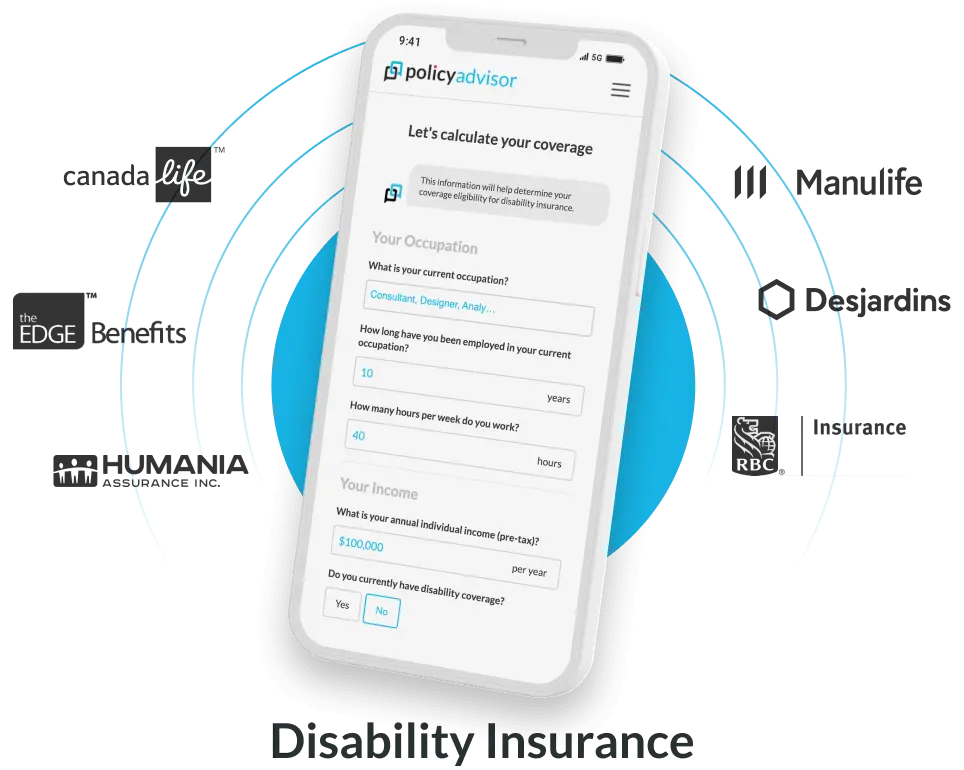
- Tell us about your work and income: Share your occupation, estimated income, and existing disability coverage, if any
- Compare your options: We will help you compare plans from leading Canadian insurers side-by-side, including their definitions of disability, benefit periods, monthly benefits, and available riders
- Choose your coverage: We will help you select and apply for the policy that fits your needs at no additional fees
Schedule a call now to get started!
Frequently Asked Questions
What is the difference between short-term and long-term disability insurance for dentists?
Short-term disability insurance provides income replacement for a limited period, typically for 6-26 weeks and sometimes up to 52 weeks. Long-term disability insurance provides benefits for a much longer period and can potentially continue to age 65, depending on the policy. Dentists with significant income and long-term financial obligations may benefit from long-term coverage.
Can dentists get disability insurance if they are self-employed?
Yes, self-employed dentists and practice owners can purchase individual disability insurance to protect their personal income. The monthly disability benefit received from an individual plan can help cover expenses related to rent of a dental clinic, staff salaries, and other fixed costs during a disability.
Is disability insurance for dentists tax-free in Canada?
Individual disability insurance benefits are tax-free when the dentist pays the premiums personally with after-tax dollars. The premiums generally cannot be deducted from taxable income.
Can I get a disability insurance quote as a dental hygienist?
Yes, similar to dentists, dental hygienists also get quotes for disability insurance. Dentists can compare disability insurance quotes based on their occupation, income, desired benefit amount, waiting period, benefit period, and coverage features.
Can disability insurance cover mental health conditions for dentists?
Yes, many disability insurance policies can cover qualifying mental health conditions, including depression and anxiety. However, you must read the policy wording, as there may be limitations or benefit-period restrictions, so dentists should review the policy wording before applying.
Can dentists increase their disability insurance coverage later?
Yes, dentists can increase disability insurance coverage later through a future insurability rider. Some individual disability policies offer future insurability or guaranteed insurability options that allow dentists to increase their coverage as their income grows, without undergoing any new medical underwriting.
Disability insurance for dentists helps protect income if an illness or injury prevents them from working. Disability coverage for dentists can come through an employer, a government program, or an individual policy. Dentists should consider their income, practice expenses, existing benefits, and career stage when determining coverage, then compare disability definitions, benefit periods, waiting periods, riders, and premiums.