

 1-888-601-9980


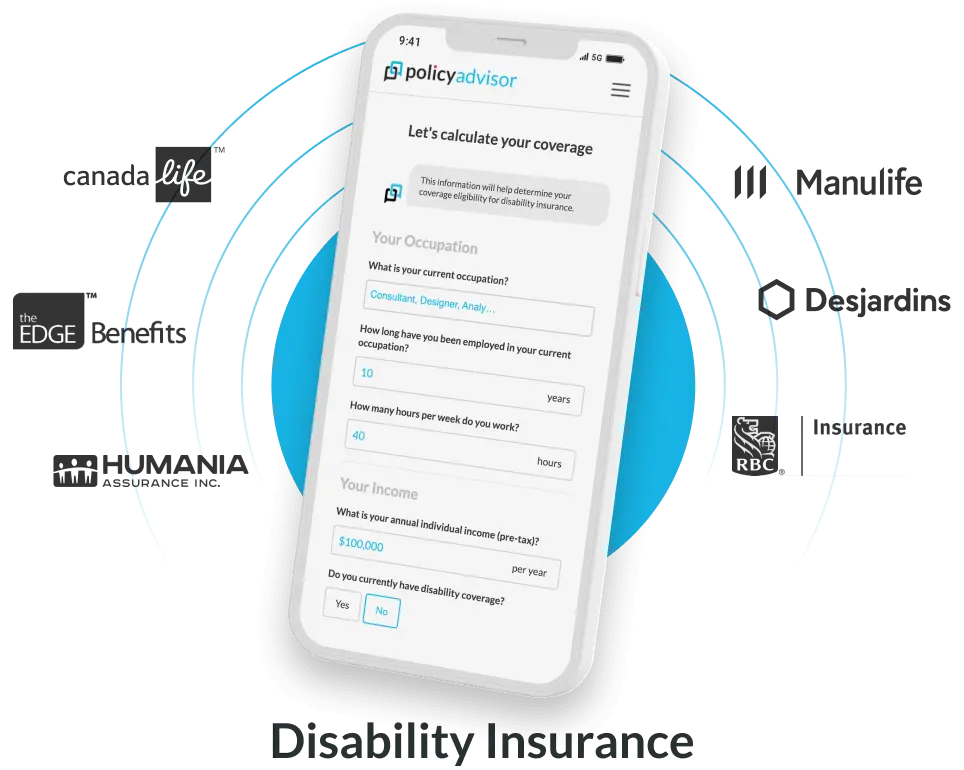
- Software engineers rely on coding, concentration, problem-solving, and prolonged computer use, making income protection important if illness or injury affects these abilities
- Disability insurance can replace part of a software engineer’s income if they cannot work due to a qualifying illness or injury
- The coverage needs for software professionals depend on income, savings, existing benefits, employment status, and financial obligations
- Riders such as own-occupation, residual disability, cost-of-living adjustment, and future insurability can strengthen the disability coverage
Software professionals are among Canada’s higher-paid occupational groups. Many software engineers earn six-figure salaries, although pay varies substantially by experience, location, employer, and specialization. Despite the lower occupational risk, software engineers still rely on their cognitive abilities, concentration, and vision to earn an income, making disability insurance an important part of financial planning. The right disability insurance policy will protect the income you have built through your career.
Do software engineers need disability insurance in Canada?
Yes, disability insurance can be an important consideration for software engineers whose income depends on cognitive skills, concentration, and consistent work. An illness or injury that affects any of these abilities could make it difficult or impossible to perform their usual role. Disability insurance replaces a portion of income when a covered illness or injury prevents them from working, provided they meet the policy’s eligibility requirements.
Software engineers also require prolonged screen time, tight deadlines, demanding project schedules, and periods of intense concentration. Mental health conditions such as anxiety, depression, or burnout can affect concentration, decision-making, productivity, and the ability to work. Depending on the policy terms, disability insurance may provide benefits when a qualifying mental health condition prevents an individual from working. They may also have student loans, family expenses, or other financial commitments that can be difficult to maintain if a disability prevents them from earning a regular income.
What disabilities can prevent software engineers from working?
Software engineering is primarily desk- and computer-based work, but several physical, cognitive, and mental health conditions can interfere with a professional’s ability to perform their job. A condition doesn’t need to be visible or physically disabling to affect work; what matters is whether it prevents the person from reliably performing the substantial duties of their occupation under their disability policy.
Some examples of conditions that may affect a software engineer’s ability to work include:
- Vision conditions: Severe vision loss or conditions that make prolonged computer use difficult can affect coding or other technical work
- Musculoskeletal conditions: Chronic back, neck, shoulder, or wrist problems can make sitting, typing, or using a computer for extended periods difficult
- Neurological conditions: Conditions such as multiple sclerosis, Parkinson’s disease, migraines, or traumatic brain injuries can affect concentration, coordination, memory, or processing speed
- Mental health conditions: Severe anxiety, depression, bipolar disorder, or other mental health conditions may interfere with concentration, decision-making, communication, and the ability to maintain regular work
- Cognitive conditions: Conditions affecting memory, attention, reasoning, or executive function can make it difficult to write and review code, solve technical problems, or manage complex projects
- Serious illness and injuries: Cancer, major injuries, chronic illnesses, or other conditions may reduce stamina and prevent an engineer from maintaining their normal workload or schedule
How does disability insurance work for software engineers in Canada?
Here’s how disability insurance works for software engineers in Canada:
- Pick the right coverage: Based on your income, occupation, financial needs, and medical history, choose a monthly benefit amount, definition of disability, waiting period, benefit period, and type of coverage. The monthly benefit is typically a percentage of pre-disability income, subject to the maximum set out in the policy, which may vary per insurer
- Experience a covered illness or injury: Once your coverage is in place, you may be eligible to file a claim if the condition prevents you from performing the duties of your occupation under the policy’s definition of disability.
- Notify the insurer and raise a claim request: Your doctor confirms your disability, and you inform the insurer about it. Submit a claim request with all the required documents as soon as possible. The insurer reviews the documentation to determine whether you meet the policy’s eligibility requirements.
- Complete the waiting period: For the monthly disability benefits to kick in, you need to wait until the waiting or elimination period is over. This is the length of time you must be unable to work before monthly benefits begin, as stated in your policy
- Receive monthly benefits while you remain eligible: Once the waiting period is over, you will start receiving the monthly disability benefit. Payments generally continue while you meet the policy’s definition of disability. Benefits stop if you recover and return to work, no longer meet the disability definition, or reach the end of the policy’s benefit period
Definition of disability for software engineers
The definition of disability determines when an insurer considers a software engineer unable to work and eligible to receive disability benefits.
Own-occupation:
Under an own-occupation definition, tech professionals can qualify for benefits if an illness or injury prevents them from performing the substantial duties of their insured software engineering occupation.
For example, a software engineer develops a neurological condition that significantly affects their concentration and ability to write or review code. They can no longer perform their usual engineering duties but are still capable of teaching programming or providing technical consulting. With qualifying own-occupation coverage, they may be able to work in that alternative role while continuing to receive disability benefits.
Any occupation
Any-occupation disability insurance uses a stricter standard to determine whether you qualify for benefits. Rather than focusing only on your ability to perform your specific software engineering role, the insurer considers whether you can work in another occupation suited to your education, training, experience, and medical capacity.
For example, a software engineer who can no longer code because of a physical or cognitive condition but can perform suitable technical, project management, or administrative work may not qualify for benefits under an any-occupation definition.
Types of disability insurance for software engineers in Canada
The types of disability insurance available to software engineers depend on how they work, how long they need income protection, and whether they already have coverage through an employer. A full-time employee may have access to group disability benefits, while contractors, freelancers, and self-employed professionals generally need to arrange their own coverage.
Disability insurance based on who provides it
- Individual disability insurance: This type of disability insurance can be directly bought from a private insurer. It is more flexible and offers comprehensive coverage based on your chosen definition of disability and coverage needs. Coverage and pricing depend on factors such as occupation, income, health history, and the policy options selected.
- Group disability insurance: Usually provided through an employer or professional association as part of a benefits package. It can provide valuable income protection, but benefits may be subject to maximum payouts, specific disability definitions, exclusions, coordination with other benefits, and conditions tied to ongoing employment. Coverage may also end if the person leaves the employer or plan.
- Government disability benefits: Software or tech professionals in Canada may also qualify for government programs such as Canada Pension Plan Disability (CPP-D) or Employment Insurance (EI) sickness benefits. In 2026, EI sickness benefits provide a maximum benefit of $729 per week; the CPP disability benefit offers up to $1,741.20 per month, although actual payments depend on CPP contribution history and are not guaranteed
Disability insurance based on length of coverage
Software developers or engineers can also choose disability insurance based on how long they need benefits to continue:
- Short-term disability insurance: Provides up to 100% income replacement with little to no waiting period. Benefit periods vary by plan, typically lasting 6-26 weeks or sometimes up to 52 weeks. Short-term disability insurance can help cover expenses during recovery from an illness or injury and may bridge the gap before transitioning to long-term disability coverage
- Long-term disability insurance: Provides income protection of up to 85% when a disability keeps a software professional from working for an extended period. Depending on the policy, long-term disability insurance benefits may continue for 2, 5, or 10 years, or potentially until a specified age such as 65
Disability insurance based on role
Software professionals work under different employment arrangements, from full-time positions with technology companies to contract, freelance, and self-employed work. This can affect the type of coverage they should consider.
- Full-time employees: May have short- or long-term disability coverage through an employer. Review benefit limits, disability definitions, benefit periods, taxes, and portability before buying additional coverage
- Contractors and freelancers: Often lack employer benefits and may need individual coverage to protect their income between or during contracts. Eligibility and underwriting can depend on income documentation, work history, and the insurer’s requirements
- Self-employed professionals: Usually arrange their own income protection. Individual disability insurance can replace personal income, while business overhead expense coverage may help pay eligible operating costs, such as rent, utilities, and certain staff costs, if the business owner becomes disabled
How much disability insurance coverage do software professionals need?
Software professionals often earn above-average incomes in Canada. They should thus consider getting disability coverage that can replace at least 60% of their income. Some of the factors they should consider when analyzing the coverage they need are as follows:
- Income: Consider your current income and determine how much you would need to replace to maintain your lifestyle and meet regular expenses during a disability
- Savings: Your emergency savings can also help cover expenses during a disability, particularly during the waiting period before benefits begin
- Any existing coverage: Review any disability benefits available through your employer, professional association, or government programs
- Offsets: Some disability policies reduce their benefits when you receive income from other sources, such as CPP-D, workers’ compensation, or employer-sponsored disability plans. Understanding these offsets can help you determine how much additional coverage you may need
- Any other debts or financial obligations: Consider your mortgage, student loans, car payments, household expenses, childcare costs, and other recurring financial commitments that would continue even if you stopped earning an income
Disability insurance riders for software engineers in Canada
Software or tech professionals can enhance their disability coverage through a range of available riders. Most of the insurers will include riders such as a waiver of premium rider, COLA rider, own-occupation rider, return of premium rider, future insurability option, and partial or residual disability benefit. The terms and conditions for these riders can vary from insurer to insurer.
- Own-occupation rider: Can provide benefits if a condition prevents you from performing the core duties of your software engineering role, such as coding, even if you can work in another field
- Cost-of-living adjustment (COLA): This rider can increase your monthly disability benefit during a long-term claim to help offset inflation
- Future insurability: This rider allows you to increase your disability coverage as your income rises, such as when you move from a junior developer to a senior engineer, engineering manager, or higher-paying technical role
- Waiver of premium: If you become disabled and meet the policy requirements, your premiums may be waived while you receive benefits, allowing you to keep your income protection without continuing regular premium payments
- Residual or partial disability: Can provide benefits if you return to software development but cannot maintain your previous workload, such as reducing your coding hours because of chronic pain, migraines, or another qualifying condition that lowers your income. Many residual-disability provisions require a minimum income loss, often around 20%, although the exact threshold and calculation vary
- Return of premium: May return some of the premiums you have paid if you meet the policy’s conditions, such as making minimal or no claims over a specified period
How much does disability insurance cost for software professionals in Canada?
The disability insurance cost for software professionals, including systems analysts, consultants, programmers, data scientists, website designers, and others who belong to the 4A occupation class, ranges from $85.79 to $353.02 per month for a $5,000 monthly benefit, a 90-day waiting period and coverage up to age 65. For the same profile with $10,000 in monthly benefits, the cost ranges from $171 to $706 per month.
Monthly premiums by occupation class – Software professional (4A)
| Age (in years) | $5k monthly benefit premium | $10k monthly benefit premium |
| 30 | $85.79/month | $171.59/month |
| 40 | $131.6/month | $263.20/month |
| 50 | $213.76/month | $427.53/month |
| 60 | $353.02/month | $706.04/month |
*Illustrative cost for a non-smoker male in good health, with a $5,000 and $10,000 monthly benefit, 90-day waiting period, and coverage to age 65.
Advisor’s take: What to look for in disability insurance for software professionals
If you work in software engineering, development, or another technical role, disability insurance should be evaluated based on how a disability could affect your ability to perform your specific job. Rather than focusing only on the monthly benefit, look at the occupation definition, benefit period, and provisions for partial disability and future increases.
For example, a software engineer could develop a neurological condition, severe migraine disorder, or repetitive strain injury that makes prolonged coding and screen-based work difficult. They may still be capable of teaching, consulting, or performing less technical work, but those alternatives may not provide the same income. An own-occupation definition can be valuable in situations where you can no longer perform the core duties of your software engineering role.
At PolicyAdvisor, we recently helped a 35-year-old software engineer arrange individual disability insurance to protect their income and financial commitments if an illness or injury prevented them from continuing their technical work. The client had a high income, an ongoing house loan, and a young family, making their future earning ability an important part of their financial plan.
Client profile
- Age: 35 years
- Occupation: Software engineer at an MNC
- Family: Married with one young child
- Primary concern: Protecting a high income and maintaining household expenses during a disability
Why we recommended individual disability insurance
- Own-occupation coverage to get income replacement in case a disability prevents the software engineer from performing the core duties of their technical role
- A long benefit period can provide income replacement during an extended disability
- Individual coverage that is flexible and can remain in place if they change jobs, move into contract work, or become self-employed
- Option to customize through riders like future increase options. This allows them to increase coverage as their salary grows
Best disability insurance companies for software professionals in Canada
Software professionals can compare disability insurance from insurers such as Canada Life, Manulife, RBC Insurance, and Desjardins. Canada Life is a good choice for optional riders, Manulife is good for combo plans, while the other insurers also have specific features that make them a good choice for engineers. To read more about the top options available and how they compare, you can read our blog on best disability companies in Canada.
Is workplace disability coverage enough for software professionals?
Workplace disability coverage may not be enough for software professionals. Employer plans often replace a percentage of pre-disability income, commonly around 60-70%, but may include a maximum monthly benefit, a specific disability definition, offsets from other income, and a benefit period that ends before retirement age. An individual policy can, however, help fill the gaps and provide portable coverage even if you change companies or start working independently. Moreover, with employer coverage, you must review the monthly benefit limit, disability definition, benefit period, and whether coverage ends when you leave the employer.
Are disability insurance benefits taxable for software professionals?
The tax treatment depends on who pays the premiums. If you pay the full premium for an individual disability policy with after-tax dollars, benefits are generally received tax-free. Employer-paid coverage may be taxable when benefits are paid. You must thus be aware of how each disability type is taxed and who is paying the premium for it.
Can software professionals get both disability and critical illness insurance?
Yes, software professionals can get coverage for both disability and critical illness. The two types of coverage serve different purposes. Disability insurance provides income replacement when a qualifying illness or injury prevents them from working, while critical illness insurance typically pays a lump sum after they are diagnosed with a covered critical illness. A software professional can hold both to address income loss and significant one-time expenses.
How do software engineers get disability insurance in Canada?
With PolicyAdvisor, software engineers can get a disability insurance quote in a few simple steps. Here are the steps that need to be followed:
- Share your income, job type, employment status, existing workplace benefits, and financial commitments so we can understand how much income you may need to protect
- We compare plans based on occupation definitions, monthly benefits, waiting periods, benefit periods, portability, and relevant riders
- Once you understand the differences between the available options, we can help you choose coverage that fits your circumstances and guide you through the application process
Schedule a call with a licensed advisor to compare your disability insurance options.
Frequently Asked Questions
Can software professionals who work as contractors and freelancers get disability insurance?
Yes, contractors and freelancers can apply for individual disability insurance even when they do not receive employee benefits. To get individual disability insurance, insurers may review income history, occupation, contract arrangements, and financial documentation when determining eligibility and coverage. Coverage is not guaranteed and depends on underwriting.
Does disability insurance cover repetitive strain injuries?
A qualifying repetitive strain injury may be covered if it meets the policy’s definition of disability and prevents you from working or causes a qualifying income loss. This can be relevant to software professionals who spend significant time typing, using a mouse, or working at a computer. A diagnosis alone does not guarantee benefits; insurers generally assess medical evidence and how the condition affects your ability to perform your occupational duties.
Does disability insurance cover software professionals who work remotely?
Yes, working remotely as an engineer does not generally prevent someone from obtaining disability insurance. Remote employees can get additional individual coverage along with employer-sponsored plans for comprehensive coverage, subject to insurer underwriting, income limits, and coordination between policies.
What waiting period should software engineers choose for disability insurance?
The right waiting period, also called an elimination period, depends on savings, employer benefits, and how long you could manage without an income. A longer waiting period can generally reduce premiums, while a shorter period may provide benefits sooner after a qualifying disability.
Common options include 30, 60, 90, 120, and 180 days. Keep in mind that the waiting period generally starts when you meet the policy’s definition of disability, not when you submit a claim, and benefits may be paid in arrears
Do software engineers need disability insurance if they have an emergency fund?
Yes, software engineers are still recommended to get disability insurance even if they have savings or funds. An emergency fund can help cover expenses during a short-term interruption in income, but it may not be enough for a prolonged disability. Disability insurance can provide ongoing income replacement if a qualifying illness or injury prevents them from working for an extended period.
Can disability insurance cover a software engineer who becomes partially disabled?
Some policies provide residual or partial disability benefits when an illness or injury reduces your ability to work or causes a qualifying loss of income without preventing you from working completely. These benefits are often proportional to the income loss and may require a minimum loss threshold. The specific eligibility requirements, calculation method, and benefit duration vary by policy and insurer.
Disability insurance for software engineers in Canada replaces part of their income if illness or injury prevents them from working. Learn how much coverage they may need, how individual and group policies differ, what disability definitions and riders cover, and how costs, waiting periods, and employment status affect the available options.