
 1-888-601-9980

- Self-employed individuals need personal health insurance because they do not have group benefits through an employer
- Private health insurance helps to pay for health care costs not covered by provincial health plans
- Self-employed workers may be able to deduct their health insurance premiums on their taxes
Being self-employed has a lot of upsides. You get to be your own boss, set your own hours, and plan your professional life on your own terms. The downside? No group health insurance. Whether it’s prescription medication, vision care, dental visits, or other preventive care, the costs can be substantial.
Canadian individual health/dental plans commonly reimburse in the 70–90% range for many benefits; some categories (e.g., preventive dental or hospital room upgrades) can reach 100% but are subject to annual/benefit maximums and plan design.
Read on to find out how to choose the best health insurance plans for self-employed people and more expert tips.
How much does Personal Health Insurance cost?
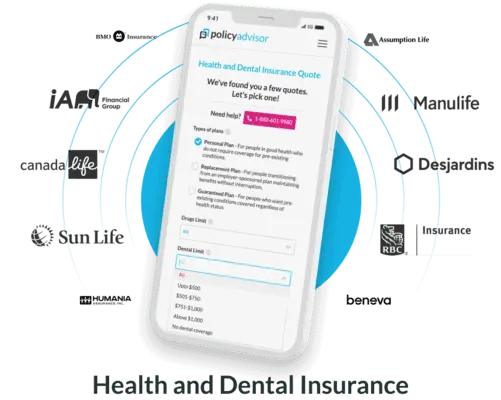
Get instant quotes from Canada's top health insurance providers and find the perfect coverage for you and your family.
Powered by

What is health insurance for self-employed individuals in Canada?
Health insurance for self-employed individuals in Canada refers to health coverage plans that are specifically tailored for those who run their own businesses or work as freelancers. These individuals do not have access to employer benefits (unless they have coverage through a spouse/partner’s employer plan) and need a health insurance plan that covers prescription drugs, dental, vision, paramedical services, and more.
In Canada, individual health/dental plans are purchased directly from private insurers or through association/affinity groups. They have the flexibility to choose from a variety of coverage options, though premiums, deductibles, and out-of-pocket costs can vary depending on the plan chosen. Additionally, self-employed individuals may be eligible for tax deductions on their health insurance premiums, making them more affordable.
Now that you know what individual coverage is, here’s why independent workers choose it, and how it protects both your household and your business.
Why do self-employed individuals need private health insurance?
Let’s take a detailed look at why self-employed individuals need private health insurance:
- Covers what public healthcare doesn’t such as drugs, dental, vision, therapy, and specialist services
- Protects against unpredictable expenses and helps avoid large, sudden out-of-pocket costs
- Encourages preventive care (you’re more likely to address issues early instead of delaying)
- Tax-deductible in many cases which can be claimed as a business expense
- No reliance on an employer with full control over your coverage regardless of your work situation
- Complements disability and critical illness insurance for full financial security
What does private health insurance typically cover?
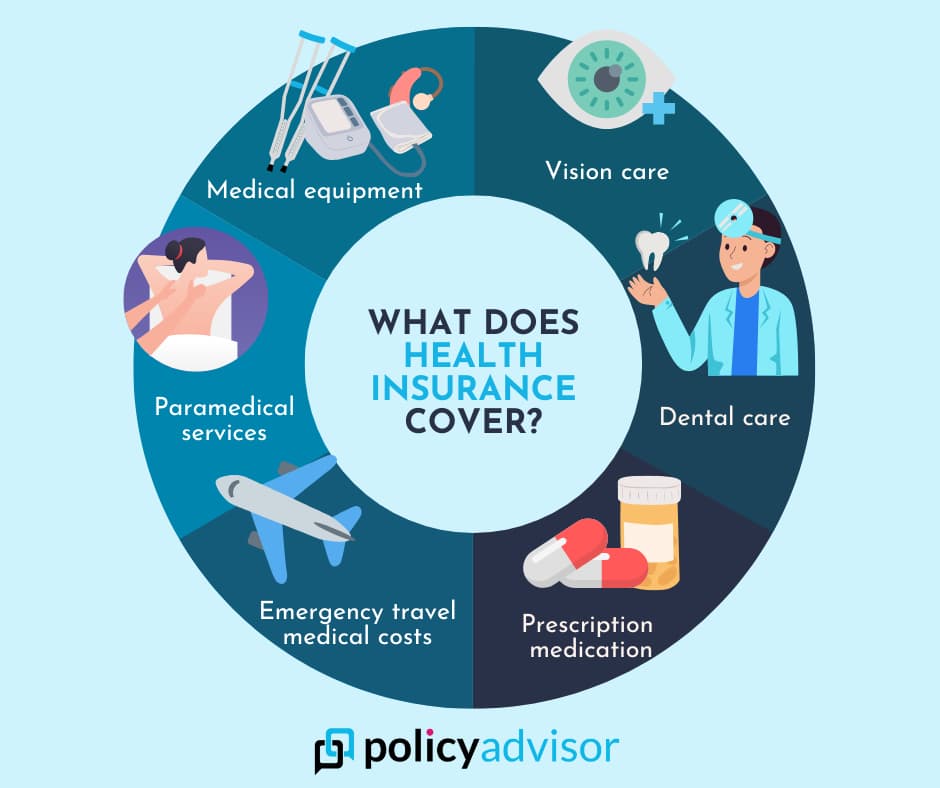
Private healthcare insurance in Canada supplements provincial healthcare by offering coverage for services not fully covered by the public system.
This typically includes:
- Dental care
- Vision care (including eyeglasses and contact lenses)
- Prescription drugs (often with more comprehensive options)
- Semi-private or private hospital rooms
- Certain medical services not covered by provincial plans (such as chiropractic care, physiotherapy, and massage therapy)
- Enhanced coverage for ambulance services, medical equipment, and treatments abroad
Provincial vs private vs group health insurance: What’s the difference?
1. Provincial vs private health insurance
| Healthcare service | Provincial healthcare | Private healthcare |
| Emergency services | Medically necessary ER care is covered for insured residents; you may still pay ambulance fees depending on the province | Helps with ambulances and some hospital‑related costs, reducing surprise bills and adding financial protection |
| Hospital stays | Standard ward rooms and medically necessary inpatient care are covered | Pays for semi‑private or private rooms and other hospital extras, improving comfort during a stay |
| Prescription medications | Limited coverage outside hospital; programs vary by province, age, income, and drug list | Typically covers a large share of eligible prescription costs up to an annual maximum, filling major gaps in public coverage |
| Surgical procedures | Medically necessary surgeries are covered when provided in the public system | May cover elective or cosmetic procedures and hospital upgrades where offered, while core surgery costs remain publicly funded |
| Maternity care | Prenatal care, delivery, and medically necessary hospital services are covered | Helps with private/semi‑private rooms, prescriptions, and some postnatal supports, enhancing comfort and recovery |
| Mental health services | Psychiatrist visits ordered by a physician are covered; many counselling and therapy services are not | Covers psychologists, social workers, counsellors, and virtual therapy up to plan limits, broadening access and shortening waits |
| Diagnostic tests (e.g., MRI, X‑ray) | Medically necessary imaging and lab tests are covered, but non‑urgent tests may have long wait times | In some settings can provide access to private clinics or enhanced services, potentially shortening waits for eligible tests |
| Dental care | Generally not covered for adults except in limited hospital or special‑program situations | Core benefit of most plans; covers routine exams, cleanings, fillings, and major work up to annual or lifetime maximums |
| Vision care | Usually no routine adult coverage beyond certain medical conditions or specific programs | Covers eye exams (where not publicly funded), glasses, and contact lenses within set limits, turning big one‑off costs into manageable claims |
| Physiotherapy | Public coverage is limited and often restricted by medical need or income | Covers more frequent and flexible access to physiotherapy |
| Chiropractic services | Limited or no routine coverage in many provinces | Often covered up to a per‑visit and annual maximum, giving more choice of providers |
| Alternative medicine (e.g., acupuncture) | Typically not covered except in rare, specific programs | Often included as an option under extended health benefits, supporting broader wellness preferences |
| Home care and nursing | Needs‑based public programs offer limited hours and may have wait lists | Can provide additional home nursing and support services beyond what the province funds |
| Long‑term care | Government‑regulated facilities with income‑tested resident fees and possible wait lists | Dedicated long‑term care insurance (separate from standard health plans) can increase choice of facility and level of care |
| Ambulance services | Often partially subsidized, but co‑payments are common and vary by province | Frequently reimburses ground and sometimes air ambulance within plan limits, lowering out‑of‑pocket costs |
| Medical equipment | Some cost‑sharing programs for eligible equipment; approvals and coverage vary | Covers a broader range of eligible medical devices and supplies up to plan maximums, easing cost burden |
| International travel coverage | Very limited out‑of‑country emergency coverage, often far below typical U.S. hospital costs | Robust emergency medical travel insurance, usually with high limits and evacuation benefits, is standard on many stronger plans |
| Cosmetic surgery | Only covered when medically necessary (e.g., reconstruction after injury or cancer) | Some plans or separate products may help with elective cosmetic procedures where available |
| Health and wellness programs | Public health resources exist, but there is usually no coverage for gyms, wellness apps, or coaching | Many modern plans offer wellness spending accounts, virtual care, preventive screenings, and wellness programs that support day‑to‑day health |
2. Private vs group health insurance
| Healthcare Service | Personal (Individual) Insurance | Group (Employer) Insurance |
| Eligibility | Anyone can apply (but acceptance is subject to underwriting) | Must be part of employer/association |
| Coverage Flexibility | Three plans to choose from (with selectable add‑ons) | Fixed plan options |
| Pre-existing Conditions | May have limits or exclusions | Often covered (after waiting period) |
| Prescription Medications | Covered; depends on plan level | Covered; usually higher limits |
| Dental Care | Covered; capped limits | Covered; higher annual limits |
| Vision Care | Covered; standard limits | Covered; often better benefits |
| Paramedical Services (physio, chiro, therapy) | Covered; moderate limits | Covered; higher or combined limits |
| Hospital Upgrades | Covered (semi-private/private) | Covered; often included |
| Travel Medical | Offered as an add-on | Often included |
| Health Spending Account (HSA) | Rare | Common (especially for incorporated plans) |
| Family Coverage | Available at higher cost | More cost-effective for families |
| Portability | Fully portable | Ends when you leave the job/group |
| Tax Benefits | May be deductible (if self-employed) | Employer-paid premiums often tax-advantaged |
What are the advantages of personal health plans for self-employed individuals in Canada?
The main advantages of private health insurance for self employed Canadians are the flexibility it brings with customizable options, tax benefits, portability, and more. Let’s look at these in detail:
- Flexibility: A self-employed person gets to choose their individual plan, rather than being stuck with a group plan that may not fit their unique needs
- Customizable options: Similarly, they can tailor their health insurance coverage to make sure their plan works best for them
- Independence: Having your own individual plan plan for health coverage means you’re not reliant on anyone for financial protection
- Portability: Health coverage through an employer will end if you leave the job or retire, but private insurance moves with you
- Tax benefits: You can get a tax deduction for health insurance premiums you pay for a private health plan.

Did you know?
Coverage available under personal health insurance for self-employed Canadians
Personal health insurance plans come in tiers, depending on the coverage level that you’re looking for. In general, these health insurance packages come in basic, standard, or enhanced tiers.
Let’s look at the different types of coverage the self-employed can access in Canada below.
Cost and coverage tier for traditional health insurance
| Plan Type | Coverage |
| Basic health plan | Prescription drugs – Covers 70% up to $500/year (max $5 fee)
Dental – 70% of basic services up to $350/year (after 3 months; deductible applies) Vision – 100% up to $75 every 2 years Health practitioners – $30/visit, $300/year Counselling – $30/visit, $300/year Hearing aids – 100% up to $400 / 5 years Travel – Optional add-on |
| Standard health plan | Prescription drugs – 80% up to $10,000/year (max $7 fee)
Dental – 80% of basic services up to $750/year (after 3 months; deductible applies) Vision – 100% up to $75 every 2 years Health practitioners – $40/visit, $400/year Counselling – $40/visit, $400/year Hearing aids – 100% up to $400 / 5 years Travel – Optional add-on |
| Enhanced health plan | Prescription drugs – Up to $250,000/year (90% first $10,000, then 100%)
Dental – 80% basic up to $1,000 + 50% major up to $750/year Vision – 100% up to $75 every 2 years Health practitioners – $50/visit, $500/year Counselling – $50/visit, $500/year Hearing aids – 100% up to $500 / 5 years Travel – Optional add-on |
How much does health insurance cost per month for a self-employed person?
The average costs of private health insurance costs around $80 to $120 in monthly premiums for self-employed Canadians. The cost of health insurance depends on your age, where you live, what kind of plan you buy, and more. The chart below shows some sample quotes for private health coverage for self employed individuals.
Health insurance cost per month for a self employed individual
| Plan Type | Sun Life | Manulife | Desjardins |
| Basic | $61.32/month | $109.80/month | $101.68/month |
| Standard | $151.94/month | N/A | N/A |
| Enhanced | $239.35/month | $194/month | $196.45/month |
*Quotes based on single-person coverage (for yourself only) for a 35-year-old resident of Ontario in normal health.
Is health insurance tax deductible for self-employed in Canada?
Self-employed Canadians may be able to claim health insurance premiums in two ways, depending on how their plan is structured.
Eligible premiums can typically be claimed as medical expenses under the Medical Expense Tax Credit (METC). In some cases, such as when using a qualifying Private Health Services Plan (PHSP), premiums may also be deducted as a business expense.
Eligibility depends on CRA rules, your income structure, and the type of plan you have. You may also be able to include eligible expenses for your spouse and dependents. It’s best to confirm your situation with a tax professional before filing.
What insurance is best for the self-employed?
The best health insurance for self-employed individuals depends on their unique requirements and circumstances. If you are young, generally healthy, and with no dependents, a standard private health insurance plan might work for you. If you have a family and are a smoker, an enhanced plan might work better for you. For those with a pre-existing health condition, a guaranteed acceptance plan will work best.
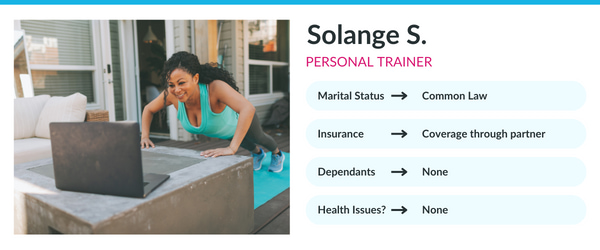
To get you started in thinking about which plan would work best for you, check out some of our self-employed friends below and see what plan worked best for them.
We suggest…
A standard plan.
Why?
Her spouse’s plan has fairly decent coverage for prescription drugs and dental insurance. That would cover most of Solange’s needs, and her own basic plan will make up the rest. If things change in the future and they have kids, we would suggest a more comprehensive supplementary plan. But for now, basic coverage is perfectly fine.
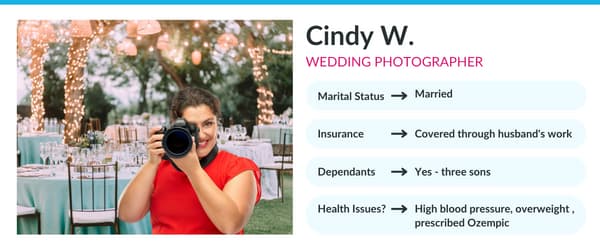
We suggest…
An standard plan.
Why?
While she has great coverage through her husband’s federal employee benefits plan, Cindy’s income in inconsistent and she doesn’t always have extra income to cover the remaining 20-30% of the medical service bills. Plus, her three boys all need braces. Her husband’s plan will cover about 70% of that, and her standard plan could make up the rest.
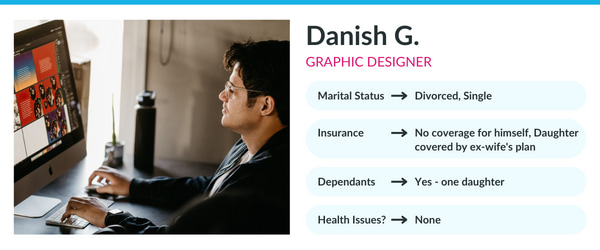
We suggest…
An enhanced plan.
Why?
His daughter has coverage through his ex-wife’s work plan, but Danish doesn’t have any coverage at all. As a self-employed business owner and single dad who is pre-diabetic, he needs to take his health seriously — and every penny counts. An enhanced plan can help him budget his healthcare costs so he can provide for his daughter and protect himself.
What are the best health and dental insurance companies for the self-employed?
These are the companies our experts recommend for the best self-employed health insurance plans:
- Blue Cross (Ontario) — Unmatched prescription and dental coverage without limits
- Canada Life — Comprehensive coverage options and flexible plans
- Manulife CoverMe — Great options for flexibility and add-ons like dental-only, vision-only, or prescription drugs-only
- Sun Life — Offers health coverage as one of its flagship products
- GreenShield (Sure Health) — Offers guaranteed acceptance coverage for those with pre-existing conditions or who cannot qualify for other plans
- Desjardins — Offers a SOLO healthcare product specifically for health and dental
- GMS — Has guaranteed acceptance plans plus no waiting periods and a LifeWorks digital wellness program to promote physical and mental well-being
How to get the best health insurance for self-employed individuals?
If you’re looking for advice on how to apply for the best self-employed health insurance options, just follow these 5 tips below:
Figure out what you need
The key to getting the best coverage is knowing and understanding what essential health benefits you need to cover and how the cost compares to the advantages.
Shop around
Comparing health insurance quotes can be easily done online through PolicyAdvisor. Look at different options to find the package that gives the most bang for your buck.
Apply online
Time is money and you can save both when you submit your application online with one of our friendly, licensed advisors. Getting medical insurance for self employed people is fast and easy with us
Compare companies closely
The health insurance provider you choose makes a difference. Compare quotes for health insurance from top companies to find who can give you the best deal. Or speak with our licensed advisors and let us do it for you!
Check with associations you’re part of
If you’re a part of any organization, check and see if they offer insurance coverage or discounts. Many of them offer exclusive insurance plans or deals.
What to avoid when looking for the best medical insurance for self employed in Canada?
When looking to get the best self-employed health insurance coverage, you should also avoid these faux-pas:
- Not comparing quotes — There’s no shame in window-shopping. Shop around before you buy, or contact us and let our agents help you find the best health plans for self-employed Canadians
- Skipping reviews — See what real customers have to say before you choose to buy from an insurance company
- Waiting too late — The sooner you buy, the lower your premiums will be and the better your plan options will be
- Cutting corners — You don’t have to get the most expensive plan, but don’t leave yourself without enough coverage either. Insurance isn’t something to skimp on
- Short-term thinking — Think about yourself and your business long-term to get a plan that will cover you now and in the future
- Not reading your policy — Understanding your coverage details is important to make the most out of your coverage, and your policy will tell all. Be sure to read it carefully!
Get affordable health insurance for self-employed individuals in Canada
If you’re a self-employed individual looking to find the right health insurance coverage that fits your diverse needs, you may need a little help! While you may be aware of your needs, it can be difficult to go through all the plans on your own!
This is where health insurance advisors like our experts at PolicyAdvisor come in! Not only can we help you pick the right plan, but we can also help you get the best possible riders and customization to ensure all your needs are taken care of. With the help of PolicyAdvisor, you can focus on your business while we keep you financially protected in case of a medical emergency.
Frequently asked questions
Can a self-employed person get group benefits?
No. If you are an independent worker, self-employed, or a gig worker, you are likely not able to access group benefit plans unless you:
- Are covered on a spouse’s plan
- Have coverage through a club or other group association
- Are a small business owner who bought a group plan for your employees
Unless you fit one of these categories, you should buy your own health plan for self employed Canadians.
Can I get health insurance for my business?
Yes. If you are a small business owner, you can buy an affordable health insurance plan as a group benefits package for yourself and your employees.
What if I’m newly self-employed, but had health insurance with my previous employer?
If you recently left a job that had a company group plan, many insurance companies will let you get guaranteed issue health insurance that doesn’t ask medical questions.
- As long as you apply within 60-90 days of your employee benefits ending, you may be able to keep your same health care plan.
- But, there may be better health coverage choices available to you.
There are many affordable health insurance plans for self-employed individuals. Speak with one of our licensed insurance advisors to plan out your best move for coverage.
What other insurance should I have if I’m self-employed?
As a self-employed person, you should consider buying:
- Disability insurance
- Critical illness insurance
- Life insurance
- Liability insurance
- And more
Being self-employed comes with benefits like independence, but it also means no group health insurance. Extended health care insurance can help cover out-of-pocket expenses for medical, dental, and vision care. Self-employed individuals can also deduct health insurance premiums on their taxes.