

 1-888-601-9980



- Buying life insurance early can help you secure lower premiums, as age and health significantly influence insurer risk assessments
- Term life insurance is generally more affordable than whole life insurance, making it suitable for temporary financial protection
- Quitting smoking, managing existing health conditions, and maintaining a healthy lifestyle may improve your eligibility for better premium rates
- Matching your coverage amount and policy term to your financial responsibilities helps avoid paying for unnecessary protection
While life insurance is important for protecting your loved ones financially, its premiums can add up to your monthly budget. Knowing the best ways to lower your life insurance premiums can help you get the coverage you need without putting unnecessary pressure on your finances. You can reduce costs by buying coverage early, choosing the right policy type and coverage amount, maintaining good health, and comparing quotes from multiple insurers.
What is a life insurance premium?
A life insurance premium is the amount of money you pay to an insurance company to keep your life insurance policy active. In return, the insurer provides financial protection to your beneficiaries by paying the agreed-upon death benefit if you pass away while the policy is in force.
Depending on your policy, you can pay life insurance premiums monthly, quarterly, or annually. The amount you pay depends on several factors, including your age, health, smoking status, coverage amount, policy type, and term length. For example, a 30-year-old non-smoker purchasing a $500,000 term life insurance policy will generally pay less than a 50-year-old non-smoker buying the same coverage for the same term.
What factors affect life insurance premiums in Canada?
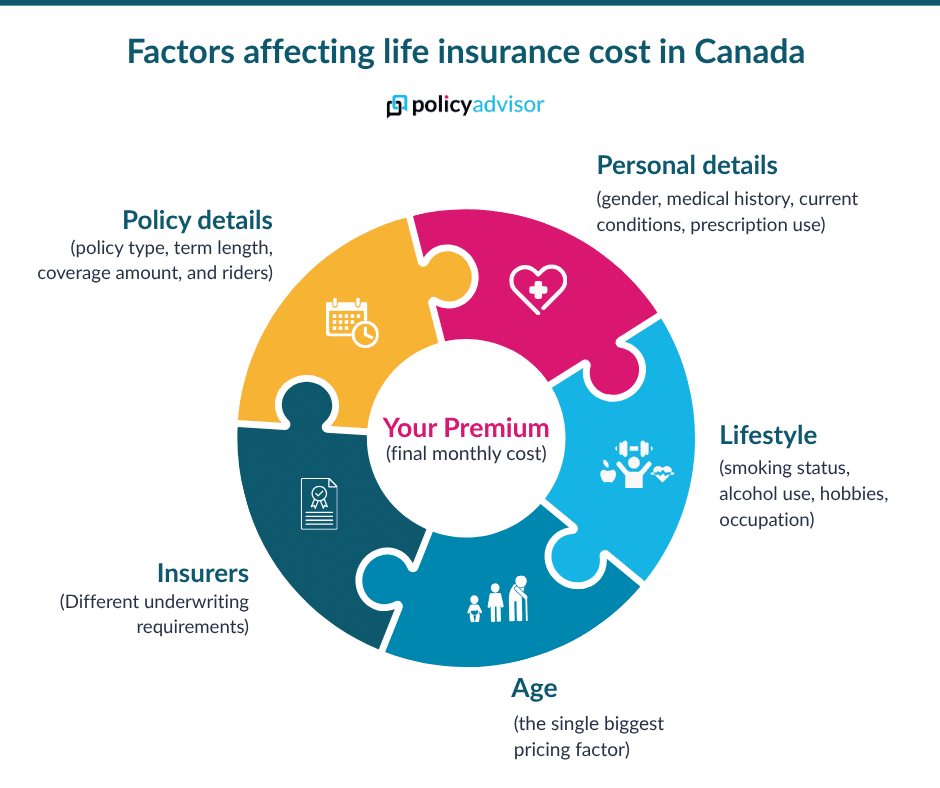
Life insurance premiums are affected by a lot of factors such as gender, age, smoking status, medical history, coverage amount, policy type, and a few others.
- Age: Younger applicants generally pay lower premiums because they have a lower risk of death
- Health and medical history: Existing health conditions, previous diagnoses, and family medical history can increase premiums
- Smoking status: Smokers and tobacco users pay higher premiums than non-smokers
- Coverage amount: Higher death benefits generally result in higher premiums
- Policy type: Term life insurance is generally more affordable than permanent life insurance
- Policy term: Longer term lengths usually cost more because the insurer provides coverage for an extended period
- Gender: Women generally pay lower premiums than men because of their longer average life expectancy
- Lifestyle and occupation: High-risk hobbies, hazardous occupations, and certain lifestyle habits can increase premiums
10 ways to lower your life insurance premium
You can get low-cost life insurance coverage by buying early, choosing the right coverage and policy, leading a healthy lifestyle, and following a few other tips.
1. Buy life insurance when you are young
Age is one of the most important factors insurers consider when calculating life insurance costs. Younger applicants pay lower premiums because they are more likely to have fewer health complications and a longer life expectancy. A 30-year-old male non-smoker seeking $500,000 in coverage for 10 years can pay $22 per month. On the other hand, a 50-year-old male will pay $61 per month.
2. Choose the right policy type
The type of life insurance you choose has a significant impact on your premiums. Term life insurance is generally more affordable than whole life insurance because it provides coverage for a specific period without building cash value. Whole life insurance provides lifelong coverage and a cash value component, which makes it more expensive. So, if your primary goal is to protect your family during your working years, term life insurance may offer sufficient coverage.
3. Quit smoking
Smoking and tobacco use can significantly increase life insurance premiums because they are associated with higher health risks. If you quit smoking, you can apply for lower premiums, although insurers may require you to remain tobacco-free for a specified period, often 12 months or longer, depending on their underwriting guidelines.
4. Choose the right life insurance coverage amount
The higher your life insurance coverage amount, the more you will generally pay in premiums. Choosing more coverage than your family needs can result in unnecessary expenses. Before purchasing a policy, calculate how much financial protection your dependants would need. Selecting an appropriate death benefit helps you avoid paying for coverage you may not need.
5. Select a suitable policy term
The length of your term life insurance policy also affects its cost. A longer policy term will cost more. For instance, a 30-year-old male non-smoker pays $22.04 a month for a 10-year term policy with $500,000 in coverage, while he pays $42.75 for the same coverage but a 30-year policy term.
6. Compare quotes from multiple insurance companies
Life insurance premiums can vary between insurers because each company has its own underwriting guidelines, risk assessment methods, and pricing structure. The same applicant may receive different quotes for identical coverage from different providers. So, compare quotes before buying a policy.
7. Choose annual payment mode
Your premium payment frequency can affect the overall cost of maintaining your life insurance policy. Some insurers charge additional administrative or billing fees for monthly payments. Paying annually, however, can help you avoid these charges and slightly reduce your annual premium.
8. Review your existing life insurance coverage regularly
Your financial responsibilities can change over time. You may pay off your mortgage, clear outstanding debts, build savings, or become less financially responsible for your dependants. Reviewing your existing life insurance coverage can help you determine whether your current death benefit is still appropriate. If you have more coverage than you need, you may be able to reduce the death benefit and lower your premiums.
9. Avoid adding unnecessary riders
Life insurance plans can be customized with a range of riders, such as a critical illness rider, an accidental death benefit rider, and a waiver of premium rider. These riders are available at higher premiums, so pick only the necessary riders that will help you get adequate coverage when needed.
10. Maintain a healthy lifestyle
Your overall health can influence your life insurance premiums. Maintaining a healthy weight, exercising regularly, eating a balanced diet, and managing existing health conditions can help improve your health profile. Insurers consider these factors during medical underwriting, and better health may help you qualify for more favourable premium rates.
Why do seniors pay higher life insurance premiums?
Seniors pay higher life insurance premiums due to increased mortality risks and the likelihood of a claim during the policy. As people get older, their risk of developing health conditions increases, making life insurance more expensive for insurers. However, the existing level-premium term and whole life insurance generally don’t become expensive during the guaranteed premium period.
Some seniors might also have pre-existing medical conditions that can affect their ability to qualify for coverage and the premium they pay. A good option for seniors is to compare life insurance premiums across insurers and choose an appropriate coverage based on their needs and budget.
Can a pre-existing condition affect life insurance premiums?
Yes, pre-existing medical conditions can affect your life insurance premiums. Insurers assess every application individually; they use your medical history to determine the risk of providing coverage. Pre-existing conditions such as diabetes, high blood pressure, heart disease, cancer, and others may result in higher premiums.
The exact premium will depend on the severity of the condition and how well it is managed. For example, someone with well-controlled diabetes may qualify for standard or slightly higher premiums, while someone with a more serious or uncontrolled condition may face higher rates or limited coverage options.
Can you lower your life insurance premiums after buying a policy?
Yes, you may be able to lower your life insurance premiums after buying a policy. Here is how you can do that:
- If your financial responsibilities have decreased, you may be able to lower your death benefit to reduce your premiums. However, coverage reductions are subject to insurer and policy conditions
- If you qualify for a better premium with another insurer, you can compare and get an affordable quote for yourself to save on premiums
- If your insurer allows, you can remove unnecessary riders later if you no longer need them and want to lower the premiums. Some built-in benefits cannot be removed
- For participating whole life insurance policies, you can use dividends to lower the premiums. However, the insurer may require sufficient accumulated dividends and projected future dividends to support premium offset
What should you consider before replacing an existing life insurance policy?
Before replacing an existing life insurance policy, you should consider the potential costs and risks. A new policy may have higher premiums because you are older or your health has changed since you purchased the original coverage. You may also need to undergo medical underwriting again, and the new policy may have a new two-year suicide exclusion and contestability period.
Common mistakes to avoid when trying to lower life insurance premiums
While finding ways to reduce life insurance costs is important, focusing only on getting the lowest premium can leave you with inadequate financial protection. You need to avoid these mistakes when trying to make life insurance premiums more affordable:
- Choosing inadequate coverage: Reducing your coverage amount just to save money can leave your family or dependents in financial hardship after your death
- Hiding medical conditions or smoking history: Providing inaccurate information to qualify for lower premiums can lead to claim disputes or denial of benefits. Always disclose your medical history and lifestyle honestly
- Choosing a policy based on price alone: The cheapest policy may not offer the coverage, flexibility, or benefits you need. Review exclusions, policy features, riders, and insurer reliability before making a decision
- Overlooking future needs: Your existing coverage should account for your future financial needs as well, such as a child’s education, a future home, or any additional debt. Avoid reducing coverage without considering these obligations
How to buy affordable life insurance with PolicyAdvisor?
At PolicyAdvisor, our licensed advisors can help you compare quotes from 30+ insurers. Here are the steps you need to follow to buy an affordable life insurance policy with us:
- Get in touch with our advisors and start by providing basic details about your age, health, smoking status, income, and desired coverage amount
- Our advisors help you explore policy options from 30+ Canadian insurers based on your budget, coverage needs, and eligibility
- Once you select a suitable policy, our advisors guide you through the application and underwriting process
- Review the life insurance policy terms and conditions and complete the premium payment. After completing all these steps, your life insurance coverage becomes active
Schedule a call now to buy a life insurance policy!
Frequently asked questions
Does quitting smoking lower life insurance premiums?
Yes, quitting smoking can help you qualify for lower life insurance premiums. Insurers generally charge smokers higher rates because of the increased health risks associated with tobacco use. Depending on the insurer, you may need to remain tobacco-free for at least 12 months or longer to qualify for non-smoker rates.
Is term life insurance cheaper than whole life insurance?
Yes, term life insurance is generally cheaper than whole life insurance. Term policies provide coverage for a fixed period, such as 10, 20, or 30 years, while whole life insurance offers lifelong coverage and builds cash value. If you primarily need temporary financial protection, term insurance can be a more affordable option.
Do life insurance premiums increase every year?
No, life insurance premiums do not necessarily increase every year. Most level-premium term life insurance policies maintain the same premium throughout the selected term. However, annually renewable term policies generally increase in cost each year as you age.
Is it cheaper to pay life insurance premiums annually or monthly?
Paying life insurance premiums annually can sometimes be cheaper than paying monthly because some insurers charge additional billing fees for monthly payments. However, the savings depend on the insurance provider and policy.
Can I switch life insurance companies to get lower premiums?
Yes, you can switch life insurance companies if another provider offers more competitive premiums for similar coverage. However, you will generally need to complete a new application and undergo underwriting. Your current age, health, and medical history may affect the new premium. Make sure your replacement policy is approved and active before cancelling your existing coverage. You must also note that replacing a policy can restart the two-year incontestability period.
Can improving my health help me get cheaper life insurance?
Yes, improving your health may help you qualify for lower life insurance premiums, depending on the insurer’s underwriting guidelines. Managing conditions such as high blood pressure, diabetes, and high cholesterol, maintaining a healthy weight, and quitting smoking can improve your risk profile. However, insurers may still consider your previous medical history when calculating premiums.
Can I negotiate my life insurance premiums with my insurer?
Life insurance premiums are generally not negotiable because insurers calculate rates based on factors such as your age, health, coverage amount, and underwriting risk. However, you can ask your insurer about ways to reduce your coverage and premiums.
You can lower your life insurance premiums by buying coverage early, choosing the right policy type, maintaining good health, quitting smoking, and selecting an appropriate coverage amount and term. Comparing quotes from multiple insurers, reviewing existing coverage, and avoiding unnecessary riders can also help you find affordable life insurance without compromising financial protection for your loved ones.