

 1-888-601-9980


- A pre-existing condition is any illness, disease, symptom, or injury for which you were prescribed medication, received treatment, or underwent surgery before the date your insurance went into effect
- Conditions like anxiety, diabetes, and high blood pressure are usually considered pre-existing
- Insurers often exclude unstable conditions from visitors to Canada insurance, so it’s essential to review your policy’s specifics
- Disclose all medical conditions accurately, carry necessary medications, build an emergency fund, and know the steps to take if a claim is denied
Emergency medical treatment in Canada can be extremely expensive for non-residents, making the right visitor insurance coverage essential, especially for travellers with existing health conditions. Many visitors with pre-existing medical conditions often wonder whether they can still qualify for health insurance while travelling to Canada.
Yes, visitors to Canada can get health insurance coverage for pre-existing conditions, but eligibility depends on the stability of the condition and the insurer’s policy terms. Several insurers, including TuGo, Secure Travel, and 21st Century, offer visitor insurance plans that may cover stable pre-existing conditions.
However, the definition of “stable” varies between insurance providers. Recent medication changes, treatments, new symptoms, hospitalizations, or ongoing medical investigations may affect eligibility, exclusions, or coverage limits. For visitors travelling with existing medical conditions, reviewing policy wording and stability requirements carefully before purchasing coverage is important.
How much does Visitor Insurance cost?
Get instant quotes from Canada's top travel insurance providers and find the perfect coverage for your trip.
Powered by

What is considered a pre-existing condition?
A pre-existing medical condition refers to any illness, disease, symptom, or injury for which you have been prescribed medication, received treatment, or undergone surgery before your insurance takes effect.
Many insurance companies may offer coverage for pre-existing conditions as long as the applicant meets the criteria set by them. This may include the condition’s stability status, a doctor’s approval, medication history, and more.
Health insurance for visitors to Canada with pre-existing conditions
Health insurance for visitors to Canada becomes even more important for travellers with pre-existing medical conditions. This is mainly because the medical treatment in Canada is expensive and can burn a hole in your pocket if you don’t have insurance. Thankfully, there are a number of insurance companies in Canada that offer coverage for pre-existing conditions to visitors. These companies include:
- TuGo
- Secure Travel
- 21st Century
- GMS
Common pre-existing conditions that may be covered include:
- Diabetes
- High blood pressure (hypertension)
- Asthma
- High cholesterol
- Thyroid disorders
- Arthritis
- Certain heart conditions
- Previous stroke (if stable)
- Sleep apnea
- Gastrointestinal conditions
Coverage is generally available only if the condition has remained “stable” for a specific period before the policy’s effective date. In most cases, this means there have been no recent hospitalizations, new symptoms, medication changes, treatments, or medical investigations related to the condition.
However, every insurer defines “stable” differently. For example, 21st Century has a stability period of 180 days; on the other hand, Allianz has 90 days (up to age 59) and 180 days (for ages 60-89).
Are all health conditions covered in visitors’ health insurance coverage?
No, not all health conditions are covered by visitors to Canada health insurance. There are several exclusions and limitations that visitors may come across when looking to purchase visitor health insurance in Canada.
Insurance companies do not cover unstable pre-existing diseases. If there have been any changes to your health condition within a specific time (typically between 90 to 180 days) before the effective start date of your policy, you may not be covered.
It also does not cover any medical emergency wherein the insured individual has willingly ignored any previous medical treatment that may have resulted in the current complication.
Importance of visitor insurance for pre-existing conditions
Visitor insurance is especially important for individuals with pre-existing medical conditions. Even a minor health issue can lead to significant financial stress while visiting Canada without the right coverage.
Risks of travelling without adequate coverage
-
Out-of-pocket costs for emergency care can be extremely high
-
Pre-existing conditions may be excluded from standard plans
-
Hospitalization or medical treatment without coverage can impact visa status or travel plans
-
Some provinces require proof of insurance for entry or stay extensions
Benefits of specialized insurance plans
-
Tailored coverage for stable pre-existing conditions
-
Access to emergency medical care without a financial burden
-
Peace of mind for both visitors and their families
-
Eligibility for refunds if travel is shortened or cancelled
What medical conditions do I need to disclose to buy visitor health insurance in Canada?
When applying for visitors’ insurance in Canada, you must disclose any pre-existing medical conditions, including chronic illnesses and any conditions you’ve been diagnosed with or treated for in the past.
However, the specific conditions that must be disclosed depend on the insurer and the type of policy. Typically, insurers require disclosure of:
- Chronic conditions (e.g., diabetes, heart disease, asthma)
- Recent surgeries or hospitalizations
- Conditions requiring regular treatment or medication
- Any medical condition that has been diagnosed, treated, or required consultation in the past few years (usually 6 months to 2 years)
Full disclosure is crucial because failure to report these conditions accurately can lead to denied claims or cancelled policies in the future.
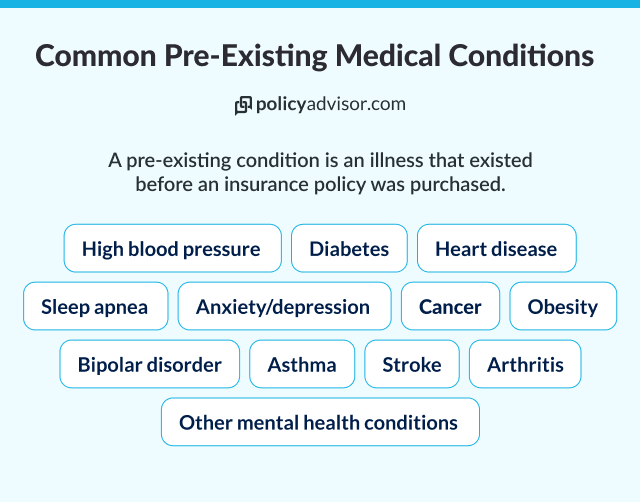
Is anxiety, pre-diabetes, and high blood pressure a pre-existing condition for visitors to Canada insurance?
Yes, anxiety, pre-diabetes, and high blood pressure are usually classified as pre-existing conditions when it comes to visitors’ insurance in Canada. These conditions, being chronic and ongoing, existed before your travel date or before the insurance policy kicks in.
However, insurance companies provide coverage for these conditions based on their stability period. If the conditions have been stable for a specified period of time before your insurance purchase, you may easily get coverage from your company.
Does pregnancy count as a pre-existing condition for visitors to Canada insurance?
Yes, pregnancy is typically considered a pre-existing condition for visitors to Canada insurance. Most travel insurance policies do not cover routine pregnancy care, childbirth, or complications related to pregnancy if the pregnancy was known before purchasing the policy.
This includes routine checkups, abortions, miscarriages, and premature birth. Routine checkups for the child born within the coverage period are also typically not covered.
Some insurers may offer limited coverage for unexpected complications up to 9 weeks before or after delivery at an additional price.
Is arthritis considered a pre-existing condition?
Yes, arthritis is generally considered a pre-existing condition by most insurance providers if diagnosed before purchasing a policy.
Coverage for arthritis depends on whether the condition is stable, meaning it hasn’t worsened or required new treatment within a specified stability period which is often between 90 to 365 days. If it meets the stability criteria, some policies may cover it; otherwise, it may be excluded from coverage.
What factors determine the coverage for my pre-existing illness?
Apart from current medical stability, insurers consider several factors, such as the severity of the condition, the applicant’s age, the required stability period, and common exclusions, to determine whether they can cover your pre-existing illness under a visitor insurance policy in Canada:
- Severity of the condition: The seriousness of your condition plays a crucial role. Severe or high-risk conditions may be excluded or have limited coverage due to the higher likelihood of complications
- Age of the applicant: Age can influence the coverage factor and have an impact on the cost of your policy premium. Young individuals with a pre-existing disease are likely to receive coverage, as there is a higher chance for their condition to be under control. However, some companies may not offer pre-existing condition coverage for older individuals. For instance, Travelance does not provide heart and lung condition coverage to individuals above the age of 79
- Specific exclusions: Every insurance company has a list of specific exclusions in its policies. They will check if your condition falls under these exclusions. For instance, certain chronic diseases or conditions that typically require long-term, expensive treatment may be denied coverage
- Stability period: Insurers also check whether they can cover a pre-existing illness by evaluating the stability period. Typically, if the condition has been stable for a specific period (e.g., 90 or 180 days) before applying for insurance, it may be considered for coverage. For instance, 21st Century has a stability period of 180 days
- Medical history and recent treatment: Insurers also review your recent medical history, including doctor visits, surgeries, diagnostic tests, and medication changes. If you recently received treatment or experienced complications related to a condition, the insurer may classify it as unstable and restrict coverage
What is the look-back period for pre-existing conditions?
Most visitor insurance plans in Canada assess pre-existing conditions using two important timelines: the look-back period and the stability period.
The look-back period refers to the timeframe before the policy’s effective date during which insurers review your medical history. Depending on the insurance company and the visitor’s age, this period can range from 90 days to 12 months. If you were diagnosed with a medical condition, received treatment, experienced symptoms, underwent testing, or changed medications during this period, the condition may be classified as a pre-existing condition.
Several insurers, such as 21st Century, offer a basic plan under their visitor insurance category that has a lifetime look-back period, while their other options, Standard and Enhanced, have a 180-day look-back period.
Since every insurer and plan type has different pre-existing condition coverage, it is important to carefully review policy wording and eligibility criteria before purchasing visitor insurance for pre-existing conditions.
What is a stability period?
A stability period in visitors to Canada insurance refers to a specific time frame during which a pre-existing medical condition must remain unchanged to qualify for coverage. During this period, the condition must not have shown any new symptoms, required a change in medication or dosage, needed medical treatment, or resulted in a hospital visit.
The stability period is crucial because it determines whether an insurer will cover medical expenses related to a pre-existing condition during the insured’s stay in Canada. If a condition is considered unstable, meaning there have been recent changes in its management or symptoms, insurance companies may exclude it from coverage.
What is a stable pre-existing condition?
A stable pre-existing condition refers to a medical issue that hasn’t worsened or required new treatments, medications, or hospitalizations for a specified period before purchasing insurance. Stability periods can differ from one insurance provider to another, depending on their policy terms, underwriting process, and specific guidelines.
If the condition remained stable during this period, some policies may offer coverage. However, if the condition had worsened or required intervention during this time, it is typically excluded from insurance coverage.
Here is a detailed chart showcasing the stability periods of various insurance companies in Canada that offer visitors to Canada insurance:
Stability periods for different insurance companies in Canada
| Insurance company | Stability period |
| 21st Century | 180 days |
| Allianz | 90 days (up to age 65)
150 days (for ages above 65) |
| GMS | 180 days up to age 80 |
| Manulife | 180 days up to age 85 |
| MSH International | 90 days (up to age 70)
180 days (for ages 71-80) |
| Secure Travel (RIMI) | 90 days (up to age 69)
180 days (for ages 70-84) |
| Travelance | 90 days (up to age 69)
180 days (for ages 70-79) |
| TuGo | 7 days (as an add on rider)
90 days (up to age 59)120 days (from age 60-69)180 days (from age 70 to 85)365 days (86 years of age and above) |
What is the cost of visitors to Canada insurance with pre-existing illnesses?
The cost of visitors’ health insurance can range from $100-$300 with a pre-existing illness depending on several factors, including age, the stability of the condition, the province that they’re visiting, and more. Based on these factors, the price usually varies.
Here’s what you may have to typically pay per month for your visitors to Canada insurance for a 30-day trip to Canada:
Cost of medical insurance for visitors to Canada
| Visitor’s age | Premiums with pre-existing conditions |
| 25 years | $92.70/month |
| 35 years | $100.20/month |
| 45 years | $115.50/month |
| 55 years | $129.60/month |
| 65 years | $168.60/month |
| 75 years | $328.80/month |
| 85 years | $453.92/month |
*The above premium cost is for a $100,000 coverage for an individual visiting Canada for a 30-day period
Common exclusions in visitor insurance for pre-existing conditions
Pre-existing condition coverage in visitor insurance to Canada often comes with exclusions and limitations. For example certain heart conditions, pregnancy, and any other ongoing treatments.
Many companies may deny coverage for continued treatment, extensive care, diagnostic procedures, or rehabilitation for a chronic illness after the initial emergency has passed. Additionally, any emergency medical expenses arising from undisclosed pre-existing conditions may be denied.
Here’s a list of pre-existing conditions that a visitor insurance provider is unlikely to cover:
- Conditions that worsened, required new treatments, and medications, or had symptoms within a specified period before the trip, usually 90 to 180 days
- routine check-ups, preventive care, and elective treatments related to pre-existing conditions
- Heart condition with insulin-dependent diabetes
- Pregnancy that occurs after the plan is effective
- Any illness that was diagnosed during your policy waiting period
- Any illness that occurs during your side trip
Best health insurance for visitors to Canada with pre-existing conditions
Most insurance companies in Canada provide pre-existing condition coverage as part of their visitor medical insurance policies, either included within the policy or as an optional add-on. Companies like Manulife, Travelance, 21st Century, TuGo, etc., are some of the best insurance companies providing pre-existing coverage for visiting non-residents.
PolicyAdvisor works with some of the best companies in Canada that actively provide comprehensive coverage.
- Manulife: A major player in the insurance market, Manulife offers visitor insurance plans that fully cover pre-existing conditions. Its Plan B provides coverage for stable pre-existing conditions
- Travelance: Provides visitors to Canada insurance plans with coverage for stable pre-existing medical conditions. Their Visitor to Canada Emergency Medical Insurance covers certain pre-existing conditions if they have been stable for a specified period, preferably 180 days
- 21st Century: Provides Visitor Health Insurance plans that can include coverage for pre-existing conditions if they have been stable for at least 180 days. Their plans cater to seniors and families, and also provide companion rates for travelling families
- Secure Travel: Offers medical insurance for visitors to Canada, which may include coverage for pre-existing conditions if stable for a specified time, typically ranging from 90 to 180 days. They offer various plans with competitive rates for travellers
- TuGo: Apart from the standard pre-existing coverage, this insurance company offers an extensive “unstable pre-existing condition” add-on that ensures complete coverage of pre-existing conditions, even if the condition has been unstable until a few days before your departure date
- Allianz: Their visitor to Canada insurance provides coverage for pre-existing conditions that have remained stable for 90 days up to the age of 65 years and 150 days for those above 65 years
What are my options if my pre-existing condition is not stable?
If your pre-existing condition does not meet the stability criteria, you can look for specific additional riders or add-on options that offer coverage for unstable pre-existing conditions for an additional charge. Although these riders do not fall under the category of standard visitors to Canada insurance policies, companies like TuGo may offer these plans.
If you’re unable to get coverage for your pre-existing condition, you may have to proceed with your visitors to Canada policy with the understanding that your unstable conditions or related illnesses will not be covered.
This may put a significant financial strain on you, so it’s ideal to start saving up in advance and have an emergency fund handy before you depart.
What if pre-existing conditions are not declared?
If you don’t declare your pre-existing condition when purchasing visitors to Canada insurance, any claims related to that condition will likely be denied.
Non-disclosure is considered a breach of the insurance contract, which can lead to policy cancellation, leaving you without coverage for any medical expenses incurred during your stay.
Additional tips for visitors with pre-existing conditions
If you’re visiting Canada with pre-existing conditions, here are some additional tips to help ensure your trip is safe and worry-free:
- Complete a physical examination: Schedule a check-up before your trip to assess the stability of your condition and get updated medical records for emergencies
- Carry all your medications: Bring enough medication for your trip, plus extra for delays, in original packaging along with a copy of your prescriptions
- Build an emergency fund: Set aside funds for unforeseen medical expenses not covered by insurance, especially if your condition requires unexpected care
- Keep your insurance provider informed: Update your insurance provider on any health changes before traveling to ensure your coverage remains valid
These tips will help you better manage your pre-existing conditions while enjoying your trip to Canada with greater confidence and security.
Get the most competitive quotes for visitor’s insurance covering pre-existing diseases
While you have all the information that you may need, purchasing the best visitors’ medical insurance can seem to be pretty daunting. You have to assess your needs, make a calculated assessment of your preferred coverage amount, apply for the policy, undergo the screening process, and more.
Schedule a call with one of our expert advisors and get the most competitive visitors’ health insurance rates to keep you financially secure while in Canada!
Frequently Asked Questions
What happens if my pre-existing condition gets worse while I’m in Canada?
If your pre-existing condition flares up while you’re in Canada, your insurance will typically cover related medical expenses if your policy specifically includes coverage for stable pre-existing conditions.
Most policies require the condition to have been stable for a certain period before your trip. If the condition wasn’t stable before your trip or is excluded, you will need to pay out-of-pocket for any treatment or care received during your visit. TuGo has the shortest stability period of 7 days, while most of the other companies have a stability period of at least 90 days.
Are there any age restrictions for visitors’ insurance with pre-existing condition coverage?
Yes, there are often age restrictions for visitors’ insurance with pre-existing condition coverage. Many insurance providers limit coverage for pre-existing conditions and offer pre-existing condition coverage up to age 85 years, such as Manulife, while some offer only till 79, like Travelance.
What should I do if my insurance claim is denied due to a pre-existing condition?
If your insurance claim is denied due to a pre-existing condition, first review the policy to check if your visitors’ health insurance plan has pre-existing condition coverage. Contact your insurer for a detailed explanation and gather supporting documentation like medical records.
If you believe the denial is incorrect, submit a formal appeal with additional evidence. Consider consulting an insurance specialist or lawyer in special cases of unlawful denial.
I am in good health. Do I need to buy coverage with pre-existing conditions?
No, if you are in good health and have no medical conditions that require ongoing treatment, you may not need to buy coverage specifically for pre-existing conditions. However, it’s important to evaluate your health history and potential risks.
If you have had past health issues, consider purchasing a plan that includes pre-existing condition coverage for added peace of mind.
Should you buy super visa insurance for your parents even if they are healthy?
Yes, it is mandatory to buy Super Visa insurance for your parents even if they are healthy. Unexpected medical emergencies can happen at any time, and healthcare costs in Canada can be very high for non-residents.
Super visa insurance helps avoid significant out-of-pocket expenses and ensures that your parents receive necessary medical care if needed.
Planning a trip to Canada with a pre-existing medical condition? This guide covers everything you need to know about health insurance for visitors, including what conditions are considered pre-existing, what is covered, and what isn’t. Learn about stability periods, age restrictions, and important tips for managing your condition while travelling. We also provide advice on what to do if a claim is denied, helping you stay prepared and protected during your visit.